
Via:iguzz.com

Natürlich kann man seine Fotos auch ordentlich auf seinem Rechner und/oder einer externen Festplatte speichern und ordentlich benennen und sortieren, so dass man das Gewünschte immer im Handumdrehen findet.
Vielleicht aber vermisst man manchmal das sentimentale Gefühl, das einen beim Durchblättern eines Fotoalbums überkommt. Und da man heute in einem digitalen Wunderland lebt, gibt es natürlich auch eine moderne Version des alten Albums, das aber selbstverständlich viel mehr kann.

Produktbeschreibung des Herstellers
Kameratasche
Die Canon Kamerataschen werden für jedes Modell spezialgefertigt. Sie haben die Wahl zwischen einer eleganten, handgefertigten Ledertasche (erhätlich nur für Digital IXUS Kameras und die Powershot Modelle der S-Serie) und einer Standardausführung mit praktischem Fach für zusätzliche Speicherkarten und Reserveakkus. Diese Taschen bieten idealen Tranportschutz für Ihre Digitalkamera und desweiteren schützt sie vor Staub und Kratzern, damit die Kamera so neu bleibt wie beim Kauf.
Link:camcorder zubehör

Touchscreen, Speicher und ZoomBisher ist nur wenig über den neuen Camcorder Flip Mino bekannt. Jedoch gibt es jetzt ein paar Details: Der Camcorder ist mit einen 1,5 Zoll-Touchscreen ausgestattet und wiegt nur knapp 100 Gramm. Somit ist der Neue ganze 40% kleiner ist als der Vorgänger Flip Video Ultra. Der Neue von Pure Digital besitzt einen 2 GB großen Speicher, der für eine Stunde Filmmaterial ausreicht. Die Auflösung beträgt 640 x 480 Pixel und die Linse hat einen zweifachen Zoom. Der taschenfreundliche Camcorder kann mit den beliebtesten Webseiten verbunden werden und der Upload zu MySpace funktioniert nun genau so gut wie zu YouTube.
Größe, Akku und Preis:Das Gerät misst in Höhe, Breite und Tiefe gerade mal 10 * 5 * 1,6 cm. Der Hersteller Pure Digital hat die Batterien durch einen nicht austauschbaren Li-ion Akku ersetzt. Dies hat die Nutzungsdauer auf vier Stunden verdoppelt. Der Akku braucht mit dem neuen Adapter zwei Stunden fürs das Wiederaufladen. Über USB benötigt er drei Stunden.Der Flip Mono entspricht also in etwas dem Flip Video in Sachen Einfachheit, aber mit dem farblichen Anstrich und den neuen Funktionen wird er sich ohne Schwierigkeiten auf dem Markt behaupten können. Bei der Farbe kann zwischen Weiß und Schwarz gewählt werden. Neben dem Preis von ca. 115 € ist aber über das Erscheinungsdatum noch nichts bekannt geworden.link:http://produktenews.gimahhot.de/1465/pure-digital-stellt-den-taschen-camcorder-flip-mino-vor/




By Kevin Ohannessian 
By early January, everyone knew that the end was near for HD-DVD. At the annual Consumer Electronics Show, Time Warner announced that its Warner Bros. film studio would no longer support both high definition film formats and that it would go exclusively Blu-ray. Six weeks later, after a series of defections, Toshiba announced that it would no longer manufacture or market the HD-DVD format. These events were the end of a war that waged for two years, costing consumers and companies millions that they spent on a soon-to-be obsolete technology. To really understand what happened, you need to start at the beginning.
The year was 1993 and two distinct groups representing various electronics companies came together to create a successor to the CD. It would be a new format that would offer the ability to save and distribute music, as well as film and computer data. Sony led the formation of one group, while Toshiba parented several companies in another. The two groups worked individually until collaborating in 1995 to develop a standard format called DVD. Many news reports surfacing at the time highlighted how much the union of the two camps benefitted the industry by preventing a format war like that of VHS vs. Betamax in the late 70s.
By March 1997, Toshiba made the first DVD player available for consumers in America, while Sony and other companies followed in the ensuing months. The first full year that DVD was available, almost 1 million players were purchased, with more than 14 million discs sold in the U.S, according to industry association DEG. By 2001 the numbers of players purchased had ballooned to 16.7 million, the number of discs to more than 300 million.
It was great news for Toshiba. The company earned patent royalties on all sales related to the DVD format. But Sony, having only contributed an error protection process in later stages, earned no revenue from the success. The fact that Sony's DVD-enabled PlayStation 2 sold extremely well and promoted the fledgling format did not insure Sony a sizable piece of the DVD pie.
But as new technologies for blu ray filme and TV emerged and computers enabled people to create more data that required backing up, the DVD's limitations began to emerge. In February 2002, Sony announced the development of a new technology for archiving data into a media format for high-definition films. It was called Blu-ray. Sony then formed the Blu-ray Disc Association, and in April, the DVD Forum announced that it was also working on a high-def format. Created in 2003 by Toshiba, the format was named HD-DVD.
In early 2005, the BDA and the DVD Forum came together to talk about combining efforts on one format, but Toshiba and Sony engineers disagreed about the formats with each side citing that one was more superior than the other.
"The companies behind Blu-ray very passionately believe we had the best technology and the right format. I believe the folks at Toshiba had a similar passion for their technology," Andy Parsons, Chairman of the BDA and senior VP of advanced product development at Pioneer Electronics, said. And there was a lot at stake. "When all these DVD players were sold, Toshiba got all this money. And Sony was locked out and they didn't want to get locked out of a next generation format," says Peter Bracke, Editor of High-Def Digest.
Technically speaking, the two formats were actually quite similar. While Blu-ray had more disc capacity, HD-DVD had an edge in interactive features. "HD-DVD's tech specs were actually better for the consumer than Blu-ray's," says Jason Chen, Senior Associate Editor at gadget blog Gizmodo. The real difference between the formats came in their physical specs. The HD-DVD format closely resembled its predecessor, the DVD. The switch from DVD to HD-DVD would be easier for both manufacturers and consumers.
As tensions rose, both camps began divvying up Hollywood studio support to gain an edge: Blu-ray would launch with exclusive support from Fox, Disney, and Sony subsidiaries MGM and Columbia, while HD-DVD had exclusive support from Universal, and Warner Bros. and its partner, Newline. Paramount and Dreamworks decided to release films in both formats.
In early 2006 Sony announced that it would debut Blu-ray films and players in May. Around the same time, Toshiba released its first HD-DVD players -- both a $500 and an $800 version. But HD-DVD gained first mover advantage when Sony delayed its releases. In the end, it was actually Samsung that released the first Blu-ray player for $1000.
The cheaper price tag for HD-DVD convinced many early adopters to side with HD-DVD. When the first Blu-ray films were finally released, quality comparisons began. Initially, HD-DVD was praised for its higher quality picture and interactive features -- like picture-in-picture or live film updates over the Internet. The first Blu-ray films didn't contain the best technology when it came to picture display, but soon the same high-def visuals would be used on both formats.
Throughout 2006, Blu-ray continued to struggle as Sony focused on the launch of its new video game console, the PlayStation 3, which included a Blu-ray drive. The electronics giant hoped for a repeat of its PlayStation 2 success in making DVD discs ubiquitous. This eggs-in-one basket approach resulted in further product delay for standalone Blu-ray players And when the $500 and $600 versions of the PS3 launched during the holiday season, Microsoft countered with a $199 HD-DVD accessory for its Xbox 360 console. While Microsoft had the lower pricetag, the triple-digit price tag on the accessory did not elevate it beyond a luxury for the niche of videophiles. Though it was considered the best format at the time, only a few hundred thousand of the add-on would ever sell.
During 2006's holiday season, HD-DVD discs reigned, outselling Blu-ray discs. But in early 2007, after the shortage of PS3s and a drop in price for standalone players, Blu-ray films began selling 2:1. In an attempt to even the scale, the HD-DVD camp responded with a deal offering five free films to consumers who bought players. Around this time, LG and Samsung announced support for both formats, while Time Warner offered to release discs that would be compatible with either player. "I think the PlayStation 3 played en enormously important role. I honestly don't know if we could've won the format war without it," Parsons stated.
The Blu-ray lead convinced movie rental powerhouse Blockbuster to turn exclusively to Blu-ray. Superstore Target followed, announcing that the only high-definition players it would sell were Sony's Blu-ray players. When major consumer-serving outlets started turning to Blu-ray, the HD-DVD camp reacted frantically. The New York Times reported that Paramount and Dreamworks, which had initially released films in both formats, were paid $150 million to go exclusively HD-DVD. But it didn't matter as Blu-ray movies continued to outsell HD-DVD roughly two-to-one the rest of the year. And during the holiday season of 2007, the millions of PS3s sold continued to push Blu-ray films above its competition. Still, neither hi-def format reached the holiday sales numbers of DVD. Then the other shoe dropped. In the first week of the new year, entertainment titan Time Warner also turned Blu-ray exclusive.
At the Consumer Electronics Show in Las Vegas, the conclusion of the format war started to take shape. "I was at CES. There was a pall. You could feel the complete change in direction from what was parity between the two [formats], to a start of a landslide toward Blu-ray," Steve Swasey, director of corporate communications for Netflix said. Many websites and blogs declared that the format war was over and that Blu-ray was the victor. An event sponsored by the HD-DVD group was cancelled, further confirming the defeatist atmosphere.
Warner's defection was the last in a series of complicated back-room dealings. According to Gizmodo, Warner was set to go HD-DVD exclusive, but didn't want to be the only studio doing so. Toshiba had to get another studio on board as well. Toshibas was in talks with Fox when Sony paid Fox $120 million to join Blu-ray instead. Toshiba went back to Warner and offered $100 million to go exclusively HD-DVD, but as Gizmodo's Chen reported, the company instead took $400 million from Sony and jumped to Blu-ray. "Money was exchanged at the last minute, which explains why the HD-DVD press event was cancelled at the last minute," says Chen.
Not long after, Netflix, which had been supporting both formats, announced its move to Blu-ray exclusivity. "The trend line was going that way. We were convinced that soon HD-DVD would no longer be relevant or even in existence," Swasey said. The same day, Best Buy announced that it would promote Blu-ray over HD-DVD. And a few days later, Wal-Mart added it's voice to the chorus. HD-DVD was dead. In February, at a press conference in Japan, Toshiba broke its silence and announced that it would no longer market or manufacture HD-DVD players. With the official announcement, Universal announced plans to publish only Blu-ray titles, and Paramount followed. Soon after, Microsoft discontinued its Xbox 360 add-on.
"A lot of money was thrown around which prolonged the battle between the two formats," says Van Baker, Research VP at Garter. Toshiba announced that its loss was well over $600 million dollars.
Yet, the war accomplished what all-good competition does -- innovation. The lower price of HD-DVD players pushed Blu-ray makers to lower their costs. As for the interactive features that only HD-DVD had -- Blu-ray discs now offer them too.
"This is how innovation works. You have different approaches that are brought to market sometimes, and they don't ultimately agree with each other. The alternative is one company comes up with a proposal, and does everybody just get in line behind them? That is not necessarily the way to get the best technology out," Parsons said.
And yet, even with the format's victory, there have been some disappointments. Just months after the world officially went Blu, the sales of players actually decreased. A sense of disappointment crept throughout gadget sites across the Web. Where was post-war growth? Where was public elation and acceptance?
With the post-holiday sales over, Sony chose to increase player prices in February and March. But its still unclear whether the higher prices will last... Then, the downturn in the economy further reduced demand for luxury items like Blu-ray players. PlayStation 3 sales remain strong, but until standalone players become significantly cheaper, the game consoles are likely to remain the de facto choice for watching blu ray filme discs. If the reception of DVDs are any indication, it's going to take sub-$199 players for mainstream adoption. Until then, Blu-rays aren't likely to overtake DVD as the standard format.
Sony may have won the format war, but the battle for market dominance continues.
from: http://www.kren.com/Global/story.asp?S=8432329

 |
 |
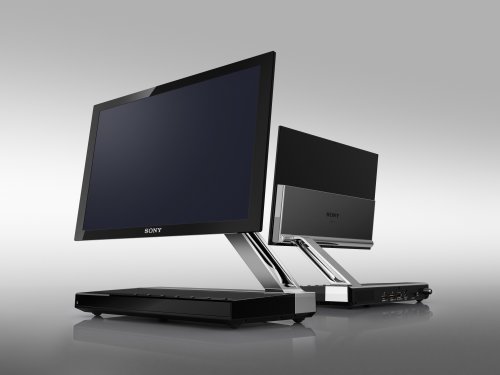
What Sony give it to you ,here is descriptions.
Sony’s OLED (Organic Light Emitting Diode) TV, the XEL-1, is truly the next big thing in television technology. It boasts a 3 millimeter thin panel and offers unparalleled picture quality with amazing contrast, outstanding brightness, exceptional color reproduction, and a rapid response time. It delivers astounding performance in all the key picture quality categories. OLED technology can completely turn off pixels when reproducing black, resulting in more outstanding dark scene detail and a contrast ratio of 1,000,000:1. OLED also creates unmatched color expression and detail and enables rapid response times for smooth and natural reproduction of fast moving images like those found in sports and action movies. The XEL-1 features connectivity options including two HDMI inputs, a digital tuner, and a Memory Stick media slot for viewing high-resolution photos.

Product Details
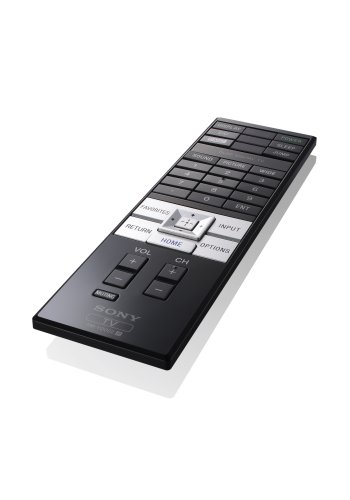
Features
Via:iguzz.com

When you take digital pictures , you can of course print them out on a photo printer. Now you can also put them on permanent display in your bedroom, living room or even in your office. With the digital frame , you can make the most of your souvenirs every day with a creatively designed object that sits perfectly inside any home like a real item of decoration
Moreover, to adapt even more easily to every setting, the AF 5075 comes with three inter-changeable frames, all chic and modern (Piano black, white and brushed aluminium)
Featuring a 7" screen and resolution of 480 x 234 pixels, the AF 5075 displays pictures in slide-show format so you can see all your souvenirs over and over again. All you need to do is insert the memory card inside the 4-in-1 card reader (SD / MMC / MS / XD), or a USB key into the frame's USB port. For even greater convenience, it is fitted with a remote control pad which handles every one of its functions



Box Contents
